If you are a Game of Thrones follower, you would have often wondered about the fabled place that lies ‘beyond the Wall’. What does it look like? How cold must it be?
I have travelled to many winter destinations around India, but this particular trek truly made me feel like a ‘wildling’. The experience of trekking one of the toughest trails in the world seemed straight out of a George R. R. Martin fable.
From sleeping on snow, walking on sheets of ice, cooking inside caves to surviving up to -30 degree Celsius with layers and layers of Jockey thermals and fleece jackets, the Chadar trek taught me more about the mountain life than any other trip I’ve taken before.
What is Chadar Trek?
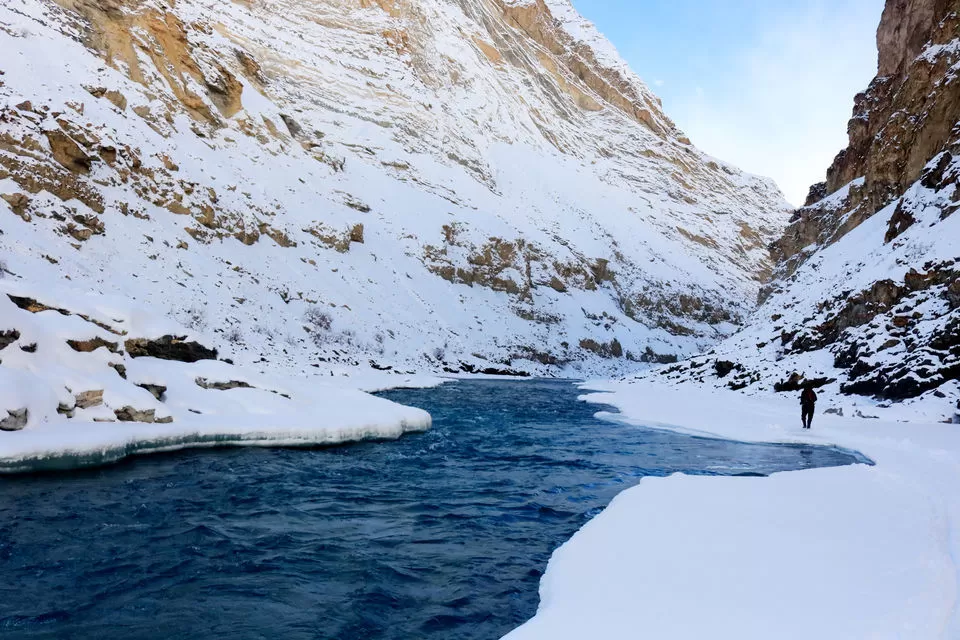
The Zanskar river in Ladakh freezes from mid January to mid February – the coldest months in the region. The trek is essentially a way for locals to commute daily, having been completely cut-off from the public roads during this period. For people in remote villages, it takes them many days during winters to even reach the nearest transport service.
Mountaineers and trekkers are lured to this trail by its treacherous nature to test their survival skills. Not everyone can walk on the ‘chadar’ (frozen blanket of ice) in -30 degree Celsius. It requires a carefully curated inventory of proper clothing, high-quality thermals (I personally prefer Jockey), good waterproof shoes (gumboots for this trek), reflective sunglasses (since the sun at high-altitude is exceptionally harsh) and a trekking stick with a strong grip.
Come with me on this journey…
Walking on the frozen river had been on my bucket-list ever since I started trekking. With many adventure organisations in the market, it is difficult to pick the one you can trust. So, I got in touch with an organisation I had trekked with once before. With 5 layers of warm clothes on – a sweat-absorbent layer, Jockey thermal, fleece jumper and a down jacket – and a backpack full of excitement, I boarded my flight to Leh from Bangalore.
We witnessed the magnificent beauty of the snow-covered Himalayan ranges at 30,000 ft as we flew over Ladakh. It was a sight to behold. The temperature was -9 degrees when we landed at the airport. The cold stung through my skin and re-instated its presence. The weather was a battle I had to endure manifold in the days to come.

Everything about AMS
A very prominent thing you will notice in Leh are the multiple tips and warnings for acclimatisation. More than 50 percent of the tourists fall prey to AMS (Acute Mountain Sickness). The first thing to do is rest for 24 hours as sleeping and resting is the best way to get used to the low-oxygen climate. So, always keep a buffer of 2-4 days before the trek.
To acclimatise properly, walk around the local street markets in the city which are at an even higher altitude than Chadar. Drink lots of water and rest until the trek commences. Most importantly don’t forget to pack multiple layers since the negative temperatures can get to the most experienced trekkers. I took extra care of all the above points and packed multiple sets of Jockey thermals, which proved to be the best decision later.
Before the trek begins, it is essential to get an approval of good health by a certified doctor. So, we visited a local doctor for consultation. As it turned out, my friend who was accompanying me for the trek had a low Oximeter reading which means the oxygen level in his blood was dangerously low.
The doctor immediately asked us to shift to the Government hospital and get him checked soon after which he was hospitalised and had to opt out of the expedition. At the hospital’s tourist wing, we met many trekkers who had returned from Chadar due to AMS. It is a very real syndrome that can hit anybody no matter how fit and strong. Take necessary precautions and follow your organiser’s advice seriously, since this trek can take a serious toll on your health.
Day 1
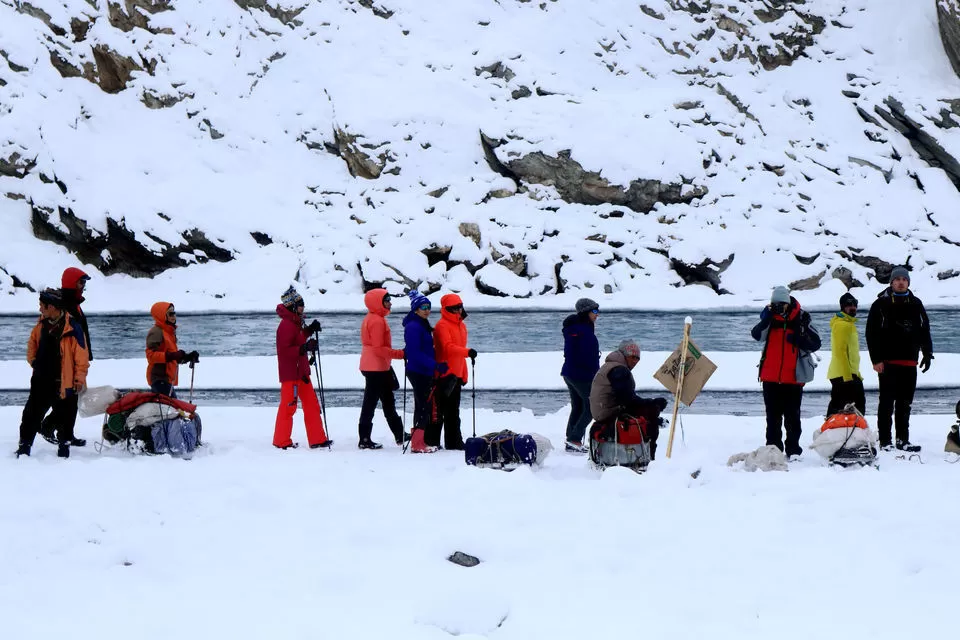
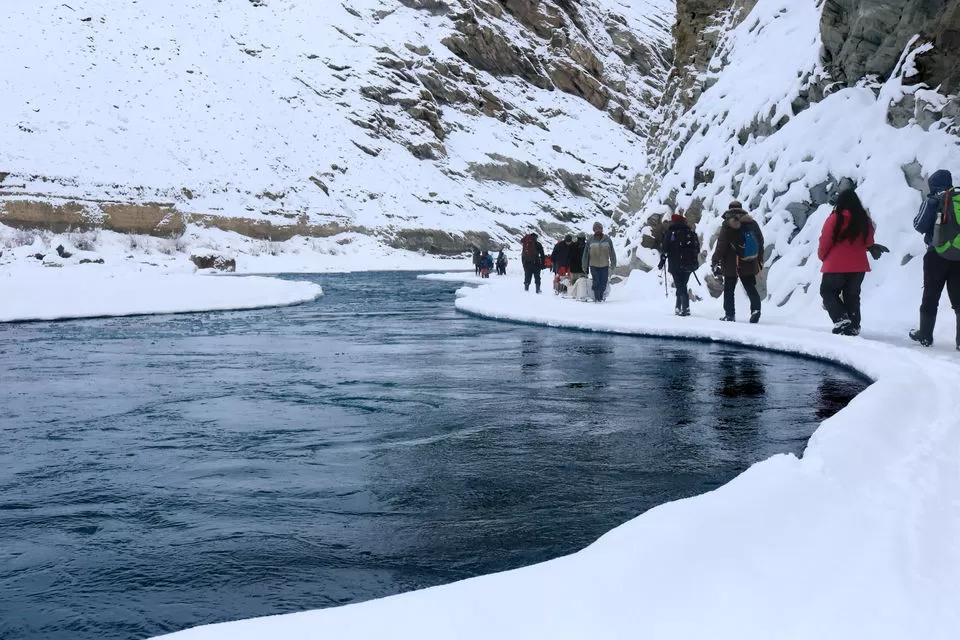
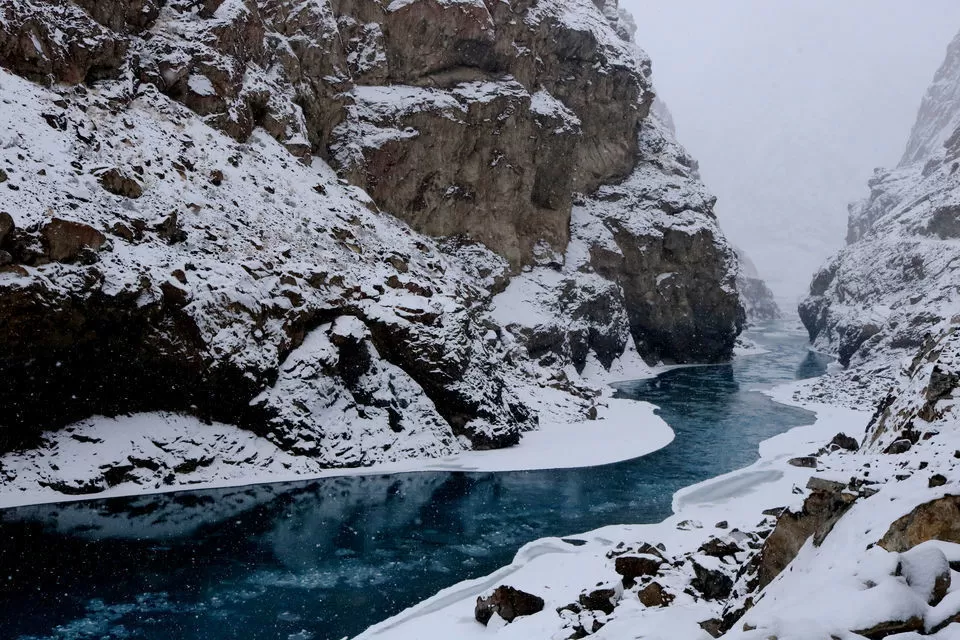
We started from Leh at 10 in the morning to reach the base camp which in itself was a task. We were told that the route was going to consist of a four-hour drive, followed by an hour-long hike. After sitting inside the van and heater for three hours we felt that this trek was going to be a piece of cake. But we were soon jolted since there was a landslide on the way, because of which we had to now cover the remaining distance on foot. So, for the next four hours we carried our backpacks and walked along the mighty Zanskar river.
What was supposed to be a quick couple of hours walk on Day 1 became a full blown hike. As soon as we got down from the tempo, the temperature dropped beyond my wildest dreams. It was bone chilling, deep into the minus degrees, the kind of cold that seeps through you before you even realize it. We strapped on our backpacks filled with layers of warm clothes, thermals, fleece, down jackets, waterproof shoes, each layer not optional, but essential for survival.
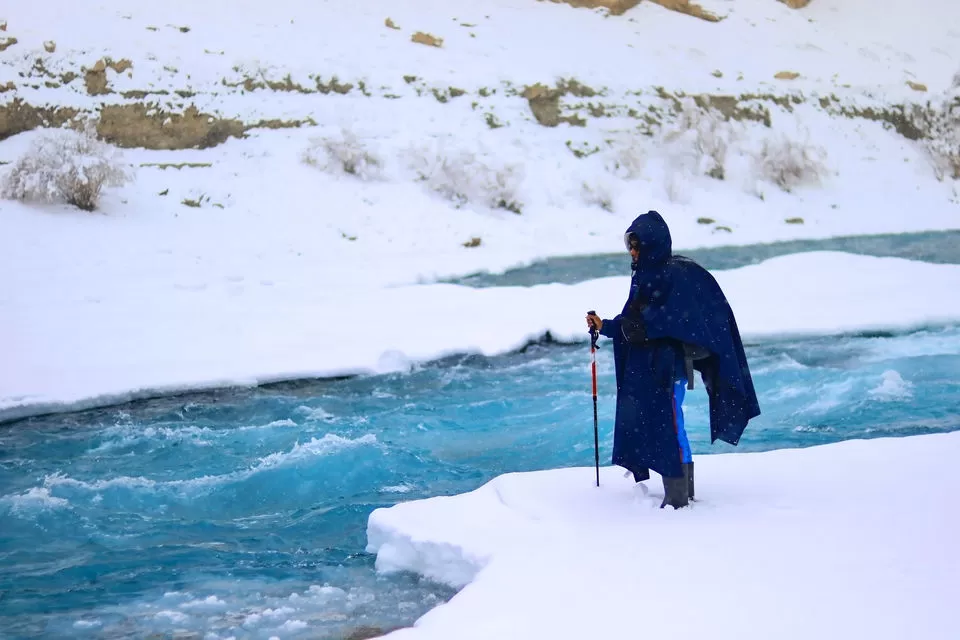
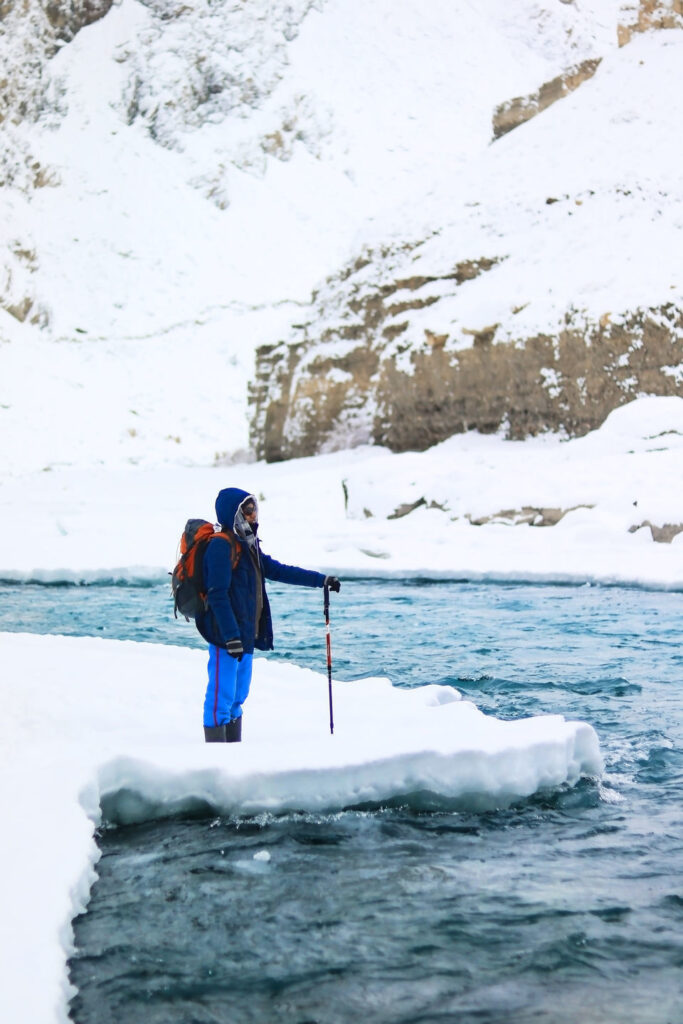
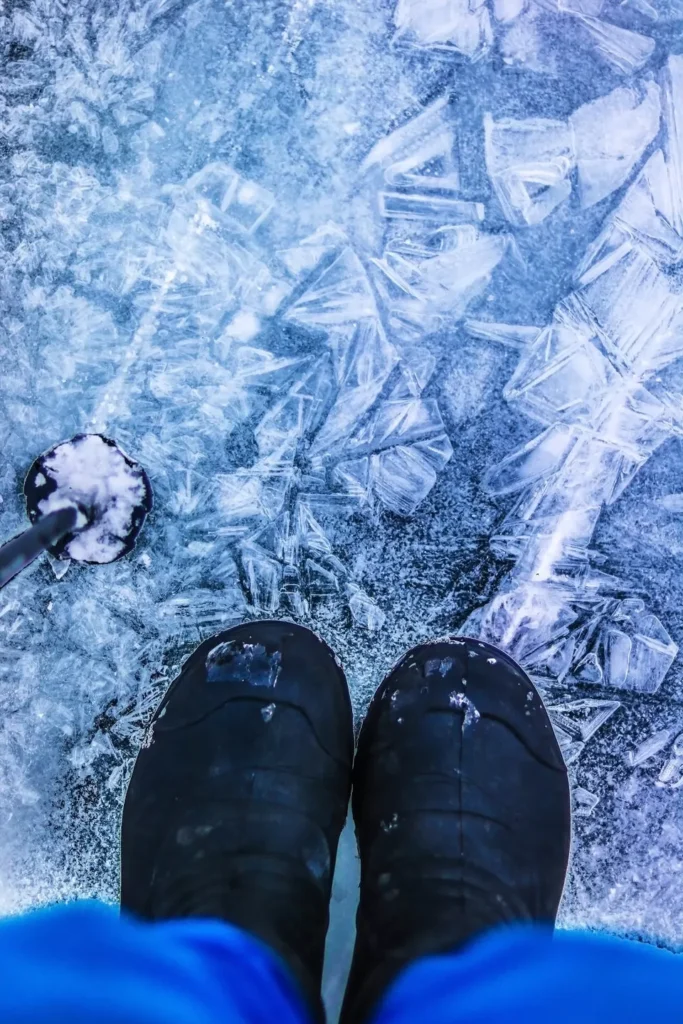
The first few steps onto the frozen Zanskar River felt surreal. The ice beneath our boots cracked softly, reminding us that this was not just a trail, it was a living, shifting surface. Some stretches were solid and glassy, others thin and unpredictable, forcing us to slow down, watch every step, and trust our instincts. The wind cut through any exposed skin like needles, and even breathing felt sharp in the freezing air.
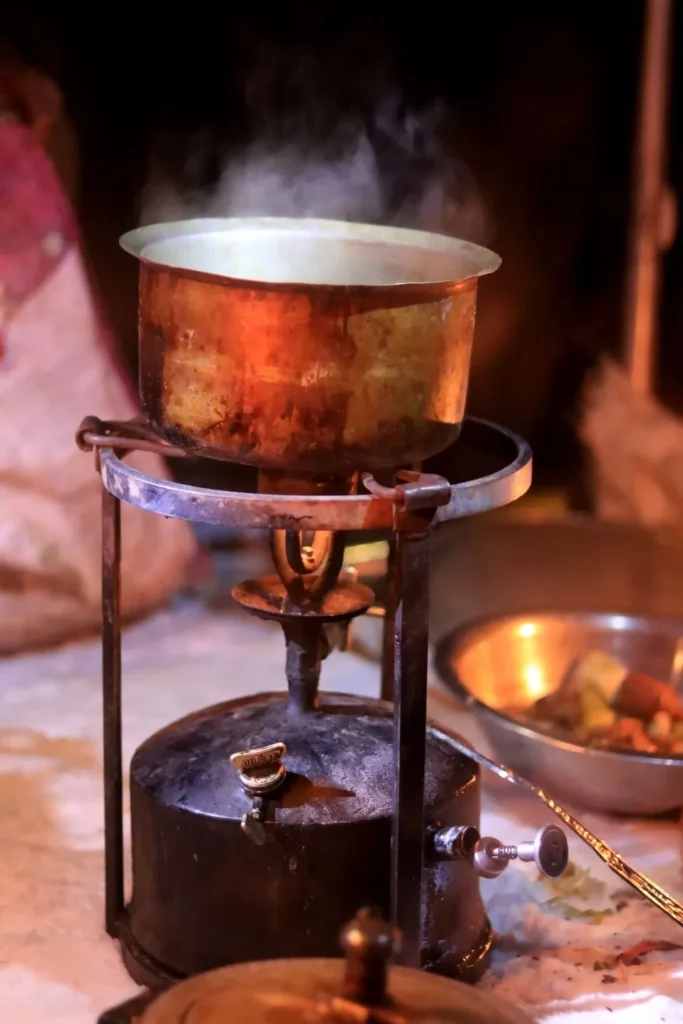
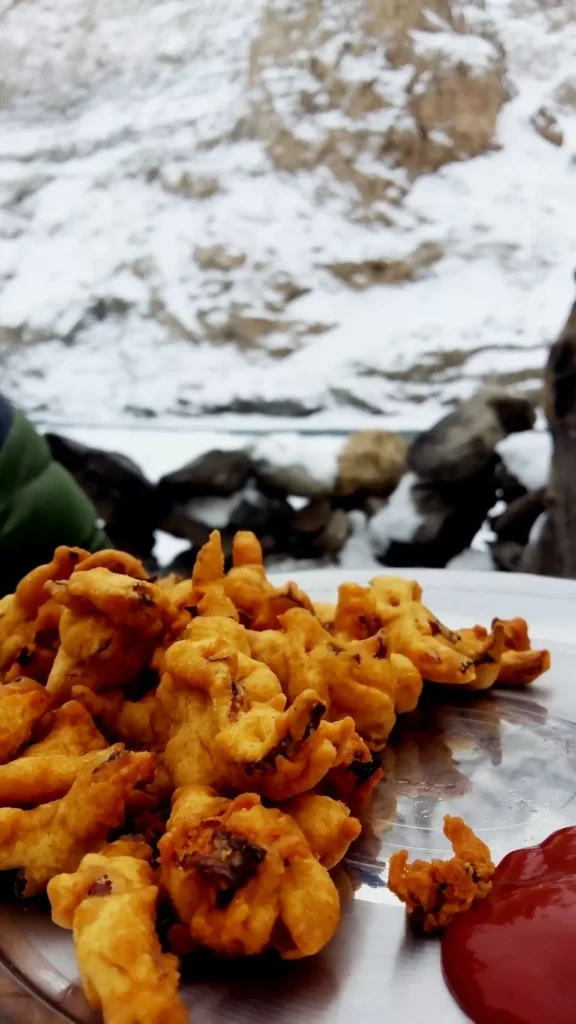
Hours passed, and the landscape remained stark, white, silent, endless. Then, almost like a mirage, we spotted it, a single café tent in the middle of nowhere. That tiny shelter became the heart of the trail. Inside, warmth felt like luxury. We sat shoulder to shoulder with fellow trekkers, hands wrapped around steel cups of hot tea, devouring plates of Maggi that tasted better than any meal back home. It was not just food, it was comfort, relief, and a brief escape from the cold.
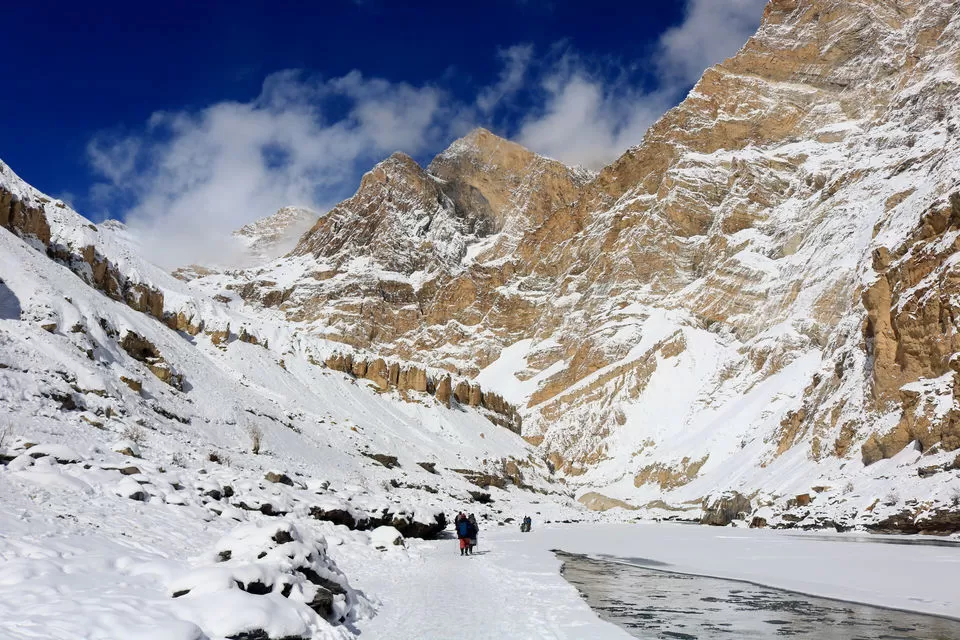
And beyond that point, reality set in, there were no more shops, no more tents, no easy exits. Just you, your group, and the frozen river stretching ahead. The trek from there was not just physical anymore, it became mental. Every step demanded focus, every layer of clothing reminded you how harsh the conditions were, and every breath felt earned. We reached the first camp by 5:00 pm. had quick dinner and tried to sleep in -30 degrees.
Day 2,3 and 4
Day2 was meant to be straightforward, everything planned down to the hour with a clear itinerary in hand. But the Chadar has its own way of humbling you. For nearly two weeks, the weather had been calm and predictable, and then suddenly, it turned. The sky darkened and snow began to fall relentlessly, covering everything in a thick white blanket. What looked beautiful from a distance was dangerous beneath. The Chadar started weakening under the fresh snow, forming cracks and breaks that we could both see and hear. It was unsettling, knowing that one wrong step could mean falling straight into the freezing river below.
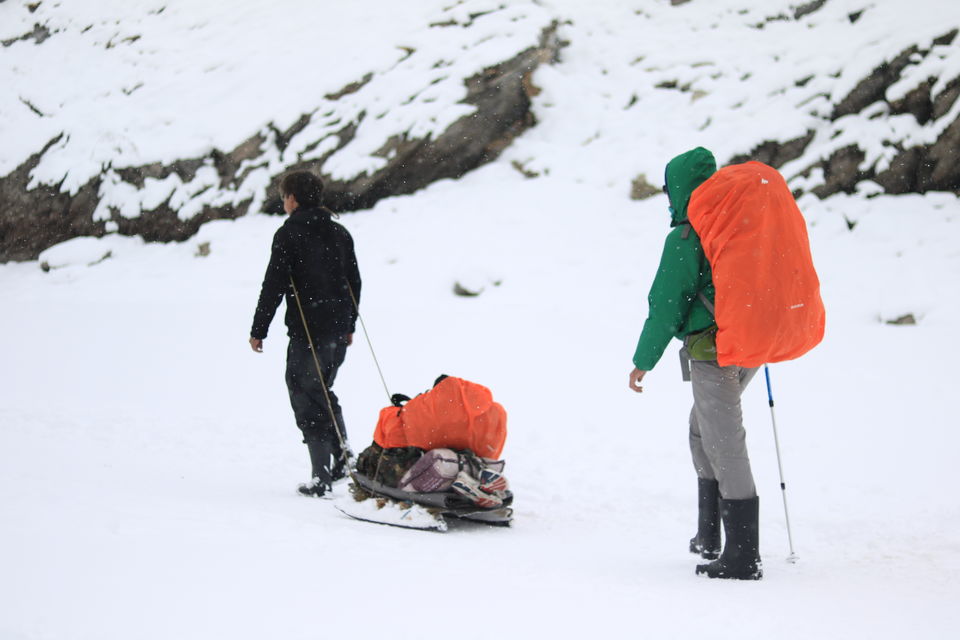
Many groups decided it was too risky and turned back, which honestly felt like the sensible thing to do. But we chose to keep going. What followed was not just a walk on ice anymore, but a slow push through knee deep snow, carefully navigating around broken sections of the trail. At times, it felt like we were just following the path created by those ahead of us, moving step by step with complete focus. The constant snowfall, surprisingly, helped keep us warm as long as we kept moving, and the walk itself felt manageable.
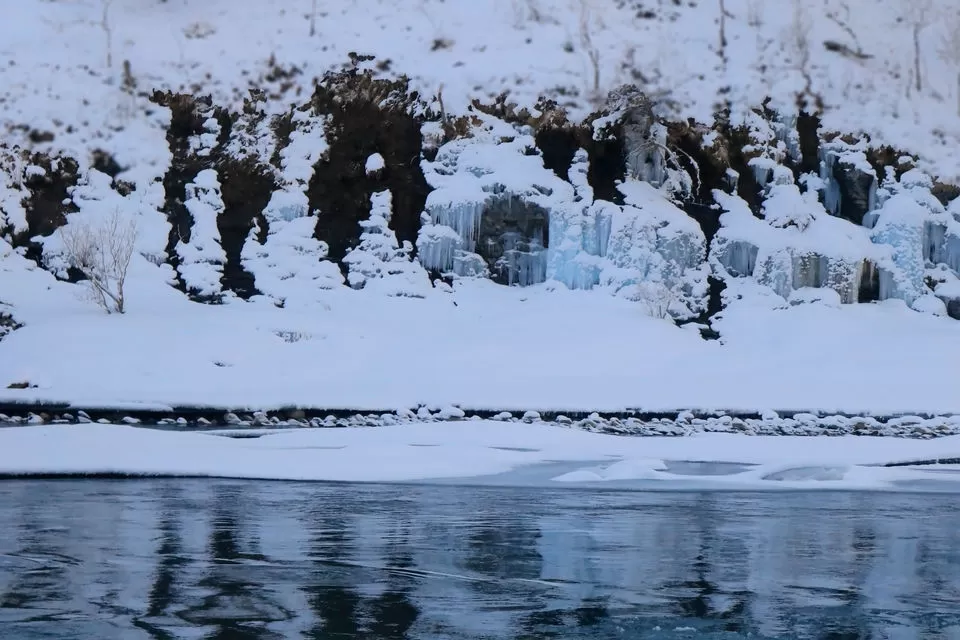

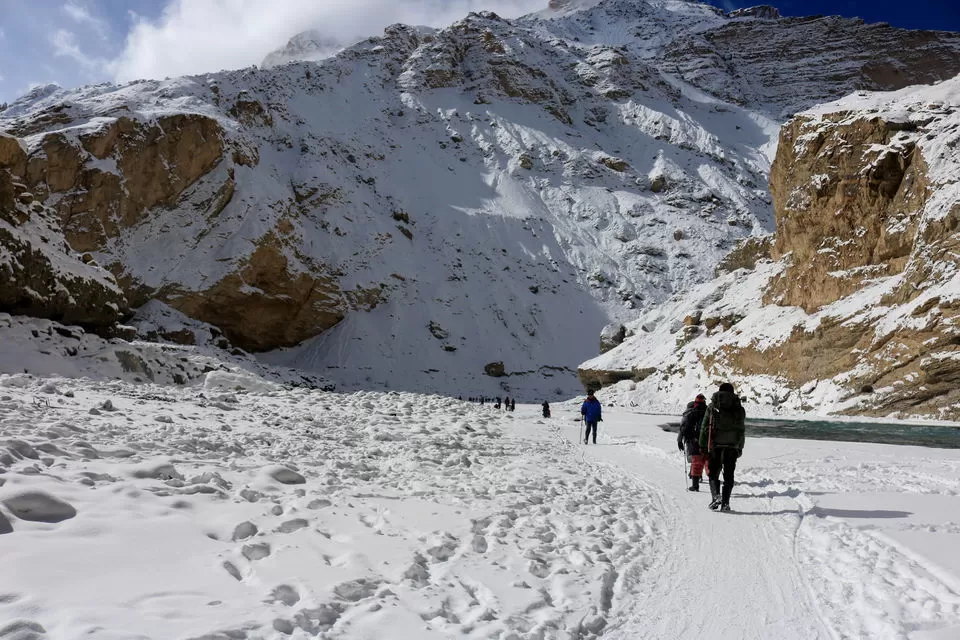
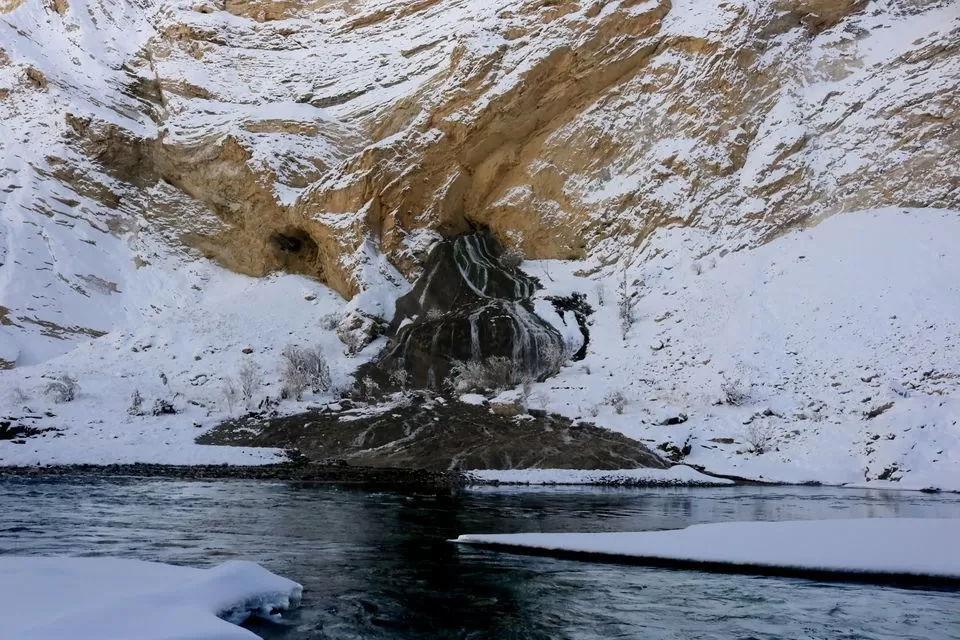
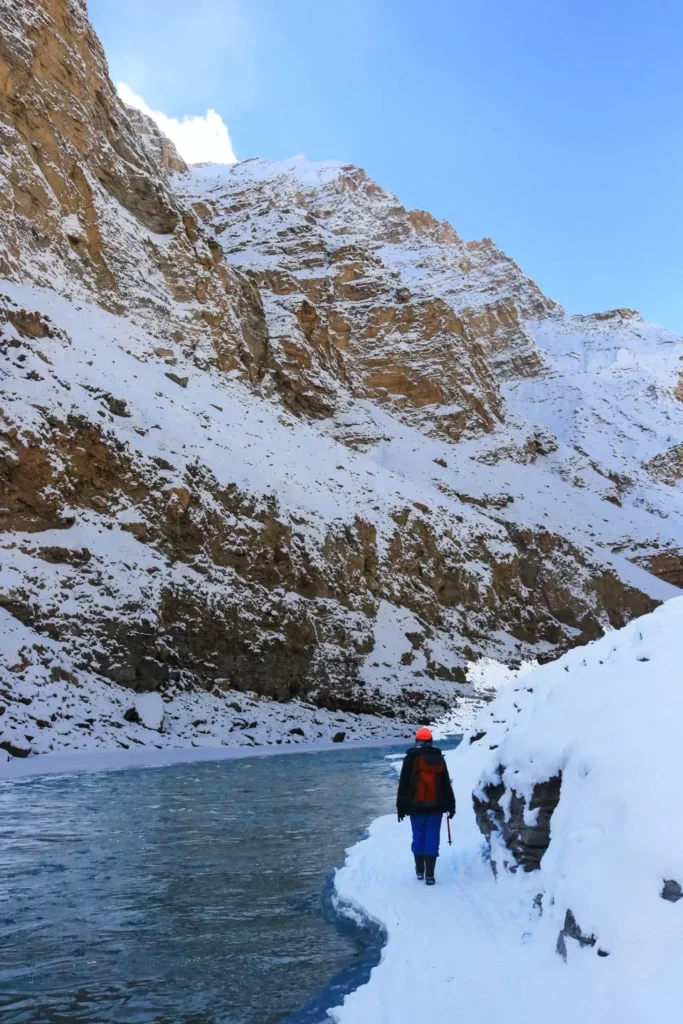
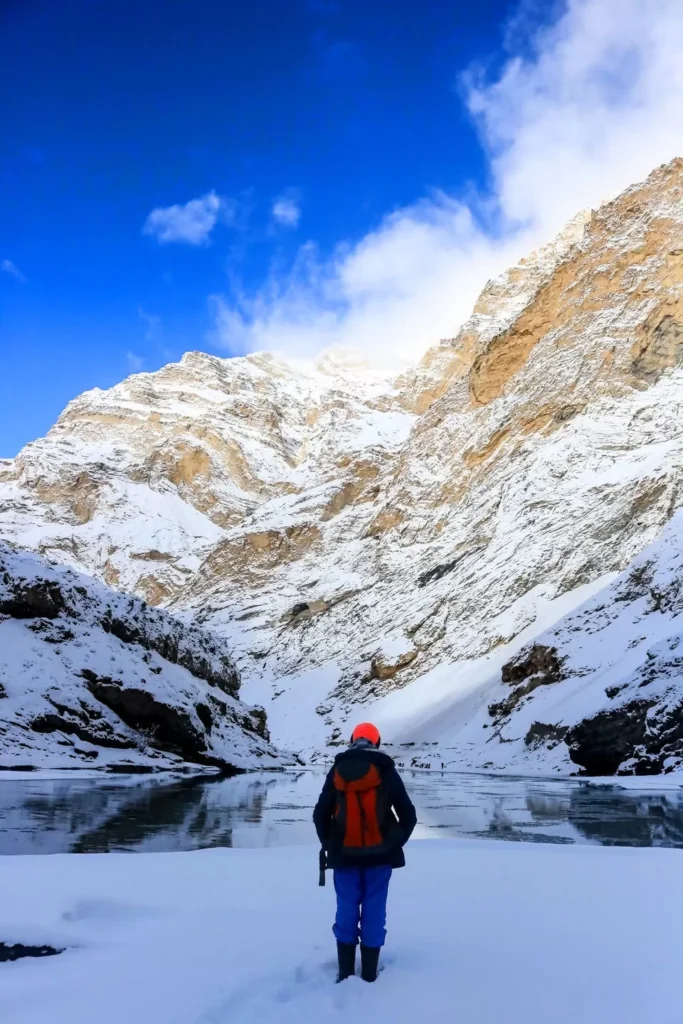
Day 4 It was finally a bright, sunny day. After 48 hours of relentless snowfall and being surrounded by nothing but blinding white, the blue sky felt like a gift. We walked for nearly eight hours, expecting to reach our final campsite and continue ahead to witness the frozen waterfall at Nerak. But the Chadar had other plans. The ice sheet over the Zanskar River had started to give way, cracking and breaking in sections that made it too dangerous to proceed.
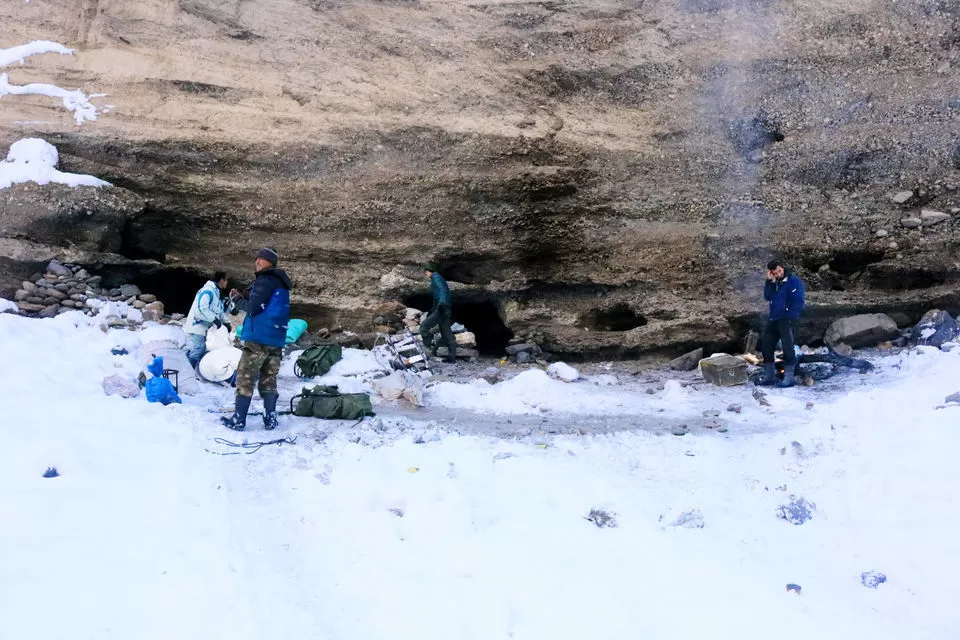
Our cook and groceries had gone ahead to set camp. At a crossing just as we were about to jump, the ground gave in and in came Zanskar gushing. We all had to jump put of the way and save ourselves from from flowing away. At this point we had empty noodles packet, no groceries, just our backpacks, our guide and luckily sleeping bags but no tents. We had to make the call to turn back, stopping just short of where we were meant to be. Our guide suggested we sleep the night in one of the caves. WOW! what an incredible experience this was. There was no open ground to pitch tents, no safe stretch to settle in. And somewhere between the disappointment of not reaching Nerak and the rawness of that night, the experience felt even more real.
Day 5
I opened my eyes to see the sunlight shine through my tent as I could hear Zanskar, and my trekking group sharing morning pleasantries with each other.
Just as the little birds got out of their nests singing, I changed into my day socks and got out rubbing my stiff fingers.
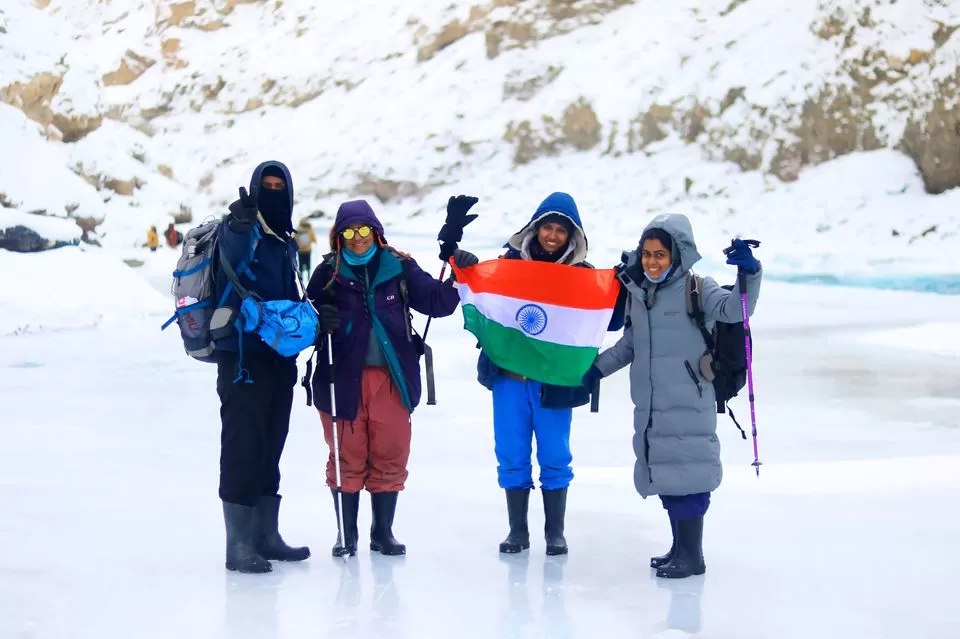
Wild winds had blown the snow off the ground, allowing the ice below to see what a bright day it was. As we completed our trek, experiencing landslide, knee-deep snow, monstrous chill, slanting night camps, swollen fingers, frozen nose and a content heart, we pulled out our tri-colour flag and held our head high in pride. We now started our walk back to the base covering 3 days distance at once.
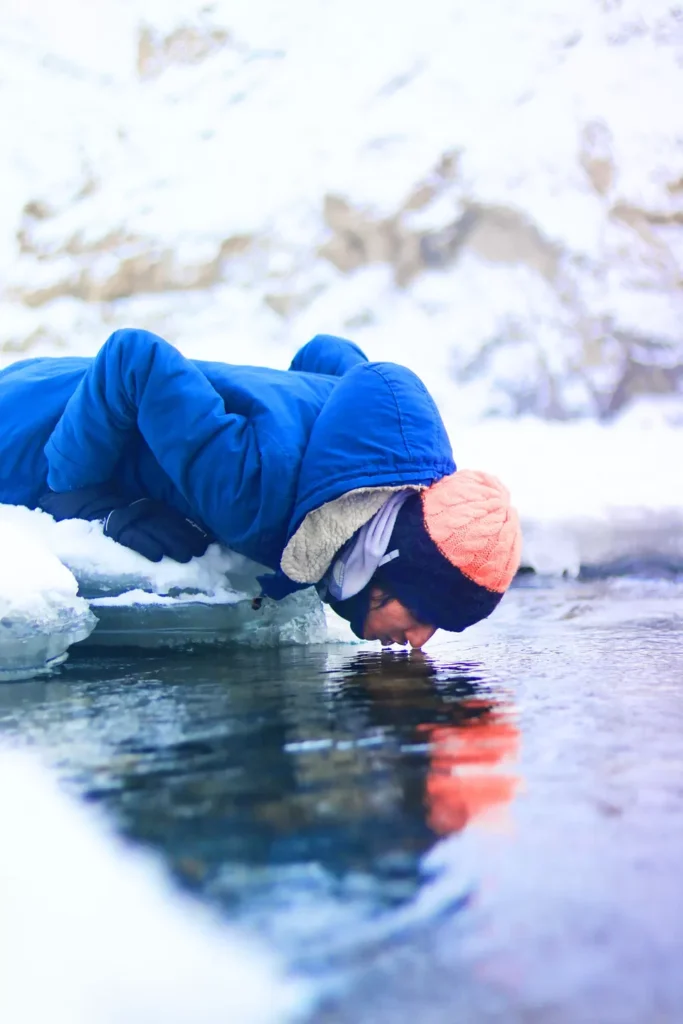
At the base, I had the itch to do something crazy, so in I went into the temporary tent chnaged my clothes and dip I went into the flowing Zanskar with ice chunks floating around me. Took a head dip 3 times and wow, the bone chill was real. This was the closest I felt to nature, the raw form of nature.
This is a moment I will always remember.
Altitude: 11,123 Ft.
Temperature: -30 degrees
Distance: 65kms
Amidst the hustle-bustle of the cities and our day to day lives, we often get lost. Lost in a way we feel stressed by mere issues, things that need not be given importance to. We can sometimes feel lonely in a crowd, but when we travel, either alone or in a group, we feel complete and content. Even just sitting on a rock overlooking nothing can give you a sense of accomplishment. I sometimes wonder if travel is overrated, but as soon as I am on the road or on the way to my next destination, I feel a wave of happiness that remains unmatched.
But along with the profound feeling of testing my survival skills and life-threatening circumstances, I made sure to indulge in a little fun by taking a dip in the mighty freezing Zanskar river before finishing the trek!
Bon Voyage!